Ford Recalls 4.3M Trucks Over Trailer Glitch
Introduction
Ford Motor Company has announced a massive vehicle recall affecting more than 4.3 million trucks, SUVs and vans in the United States due to a software glitch in the trailer controller system. The issue involves a malfunction in the Integrated Trailer Brake Control Module, which could cause the trailer’s brake lights or braking system to stop working properly.
The recall is one of the largest automotive safety recalls in recent years and mainly impacts Ford’s popular pickup trucks, including the Ford F-150 and Super Duty series. Because many of these vehicles are used for towing heavy loads such as boats, campers and construction equipment, the malfunction could increase the risk of accidents if the trailer braking system fails.
Ford has confirmed that the problem can be resolved through a software update, which will be provided free of charge to vehicle owners. The company has also begun notifying owners and dealerships about the necessary steps to address the issue.
What Caused the Recall
The recall centers on a software problem in the Integrated Trailer Module, which manages communication between the vehicle and any attached trailer. This system controls important trailer functions such as braking, lighting and signaling.
Due to a software error, the module may fail to initialize properly when the vehicle starts. When this happens, the truck may not communicate correctly with the trailer. As a result, the trailer brakes or lighting systems may not work as expected.
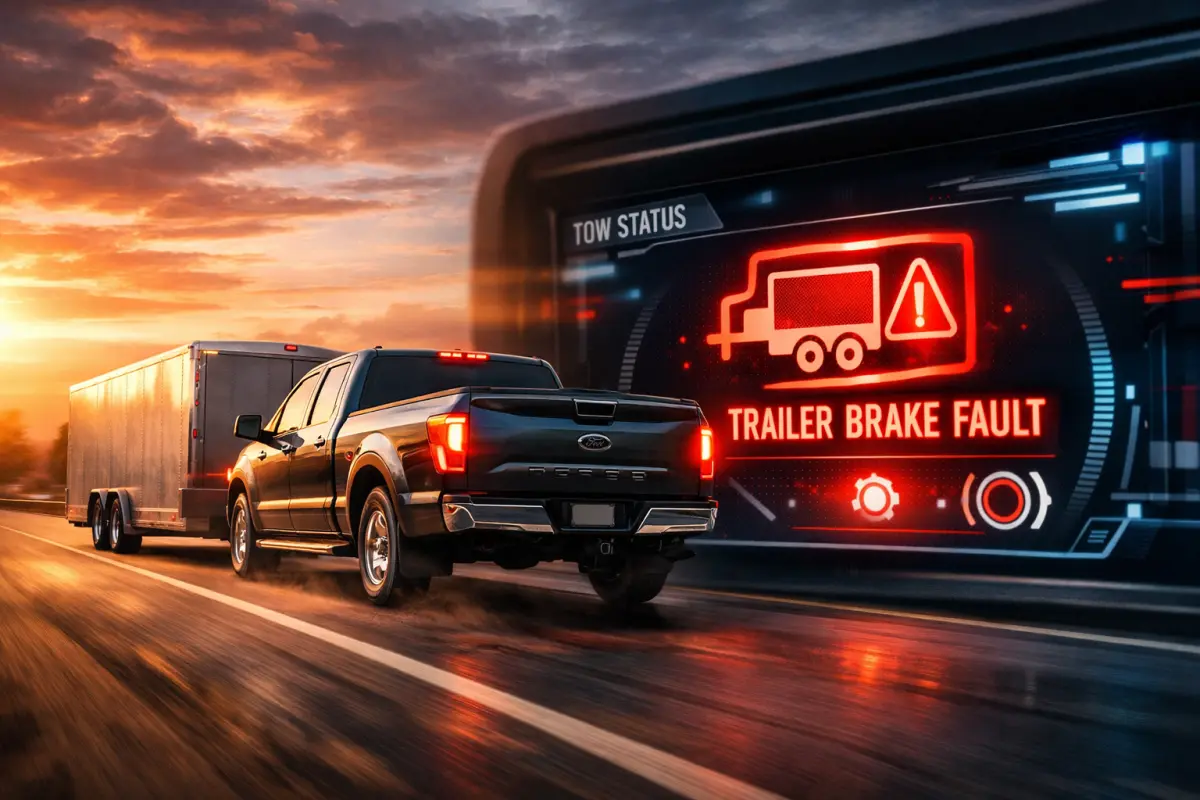
In some cases, drivers might receive warning messages on the dashboard indicating that the trailer system has encountered a fault. However, the malfunction could occur without clear warning, which is why regulators consider the defect a safety risk.
The issue is particularly concerning for drivers who frequently tow heavy trailers, as trailer braking assistance helps reduce stopping distance and maintain stability when slowing down.
Vehicles Included in the Recall
The recall affects several Ford and Lincoln vehicles produced between 2021 and 2026. Many of these models include factory-installed trailer towing packages and integrated trailer brake controllers.
The affected vehicles include:
Ford F-150 pickup trucks
Ford Super Duty trucks including F-250, F-350, F-450, F-550 and F-600
Ford Ranger pickup trucks
Ford Maverick compact trucks
Ford Expedition SUVs
Lincoln Navigator SUVs
Ford E-Transit electric vans
Among these, the Ford F-150 accounts for the largest portion of the recall because it is one of the best-selling vehicles in the United States. Ford sells hundreds of thousands of these trucks every year, making them extremely common on American roads.
The Super Duty lineup is also heavily affected, especially because these trucks are often used in commercial industries such as construction, farming and transportation where towing is essential.
How the Software Glitch Affects Drivers
When the Integrated Trailer Module fails due to the software glitch, several trailer functions may stop working. These include:
If the trailer brakes fail to engage, the towing vehicle must handle all braking force alone. This can increase stopping distance, especially when pulling a heavy load.
Another concern is the failure of trailer lights. Brake lights and turn signals are essential for alerting other drivers when a vehicle is slowing down or turning. If these lights stop working, it could increase the likelihood of rear-end collisions or traffic confusion.
Drivers may also see dashboard alerts such as “Trailer Brake Module Fault” or other system warnings indicating communication problems with the trailer.
Safety Concerns and Potential Risks
Although no major accidents have been directly linked to the issue so far, safety regulators require the recall because the malfunction could increase crash risks.
Towing heavy loads already requires careful control and longer stopping distances. If trailer brakes are disabled, the towing vehicle must absorb the full braking force, which can cause instability or difficulty stopping quickly.
The failure of trailer lighting also creates visibility problems for other drivers. In nighttime or low-visibility conditions, missing brake lights or signals could lead to dangerous situations on the road.
Because millions of Ford trucks are used for towing trailers for work and recreation, regulators consider it important to address the defect quickly before it leads to serious incidents.
Ford’s Solution: A Software Update
The good news for vehicle owners is that the issue does not require replacing mechanical parts. Instead, Ford has developed a software update that corrects the programming error in the trailer module.
Owners will be able to fix the issue in two ways:
1. Over-the-Air Software Update
Many modern Ford vehicles support over-the-air (OTA) updates, allowing the new software to be downloaded and installed automatically through the vehicle’s built-in connectivity system.
This means some owners may not need to visit a dealership at all. Once the update becomes available, it will install directly to the vehicle.
2. Dealership Service Update
Owners can also visit an authorized Ford or Lincoln dealership where technicians will install the software update free of charge.
Ford will notify affected vehicle owners through official recall letters explaining how to schedule the update or confirm whether their vehicle supports OTA updates.
Why Modern Vehicle Recalls Often Involve Software
The Ford recall highlights how modern vehicles rely heavily on electronic systems and software. Today’s trucks include dozens of electronic control modules responsible for various functions, from braking and steering to entertainment systems and driver assistance technologies.
While these systems provide advanced features and improved efficiency, they also introduce new challenges. Software bugs or coding errors can affect millions of vehicles simultaneously if the same software platform is used across multiple models.
In the past, recalls often involved mechanical defects such as faulty airbags, brakes, or engines. Today, many recalls involve software updates, similar to the way smartphones and computers receive updates to fix bugs.
The advantage is that software issues can often be resolved quickly without replacing physical components.
What Owners Should Do Next
Owners of Ford trucks or SUVs should check whether their vehicle is included in the recall. The easiest way to do this is by checking the vehicle’s VIN (Vehicle Identification Number) through Ford’s recall website or contacting a local dealership.
If the vehicle is affected, owners should follow the instructions provided in the recall notice. In many cases, the update can be installed automatically through an over-the-air update.
Drivers who regularly tow trailers should remain alert for warning messages on the dashboard and ensure that trailer brakes and lights are functioning correctly until the software update is installed.
Impact on Ford and the Automotive Industry
Large recalls can affect an automaker’s reputation, but they also demonstrate the importance of addressing safety issues quickly. By issuing the recall and providing a software fix, Ford aims to ensure that its vehicles continue to meet safety standards.
For the automotive industry as a whole, this recall reflects the increasing importance of software reliability in modern vehicles. As trucks and cars become more connected and digitally controlled, automakers must invest heavily in testing and cybersecurity to prevent similar issues.
The shift toward electric vehicles, autonomous driving systems and connected technologies will make software even more central to vehicle performance and safety.
Conclusion
The recall of 4.3 million Ford trucks and SUVs due to a trailer controller software glitch highlights both the complexity and the evolving nature of modern vehicles. A small software error in the Integrated Trailer Module has the potential to disrupt trailer braking and lighting systems, creating safety risks for drivers and others on the road.
Fortunately, Ford has already developed a solution in the form of a simple software update that can be installed over the air or at a dealership. Once installed, the update will restore proper communication between the vehicle and trailer systems.
For owners, the best course of action is to check their vehicle’s recall status and install the update as soon as possible. As vehicles continue to become more technologically advanced, software maintenance will play an increasingly important role in keeping cars and trucks safe on the road.

 Facebook
 Twitter
 Whatsapp
 Linkedin