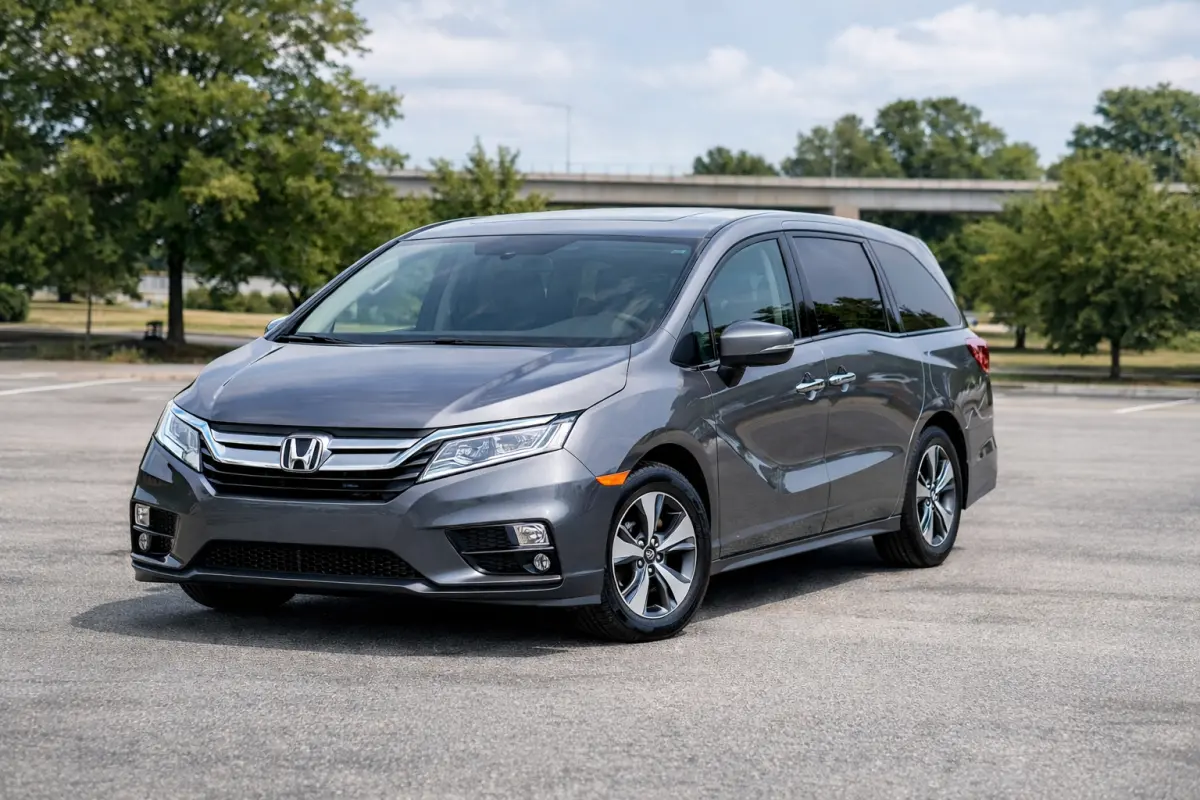
Honda Recalls 440K Minivans Over Airbags
In a significant automotive safety development, Honda has announced the recall of more than 440,000 minivans across the United States due to a defect that could cause airbags to deploy unexpectedly. The issue, which affects popular family vehicles, has raised concerns among regulators, customers and industry observers alike. While no fatalities have been reported so far, the recall highlights the critical importance of reliability in vehicle safety systems.
Overview of the Recall
The recall involves approximately 440,830 units of the Honda Odyssey, specifically from model years 2018 through 2022. According to the National Highway Traffic Safety Administration (NHTSA), the problem stems from a software-related issue in the vehicle’s Supplemental Restraint System (SRS), which controls airbag deployment.
Airbags are designed to deploy during serious collisions to protect passengers from injury. However, in this case, the system may incorrectly interpret normal driving conditions—such as hitting potholes, speed bumps, or road debris—as crash events. This misinterpretation can trigger the side or curtain airbags without warning.
What Caused the Problem?
At the heart of the issue is incorrect programming in the SRS control unit. The system’s deployment thresholds—essentially the sensitivity levels that determine when airbags should inflate—were found to be too low or improperly calibrated. As a result, routine road impacts can be mistaken for side collisions.
The defect specifically affects airbags located in the second and third rows of the vehicle. These include side airbags and side curtain airbags, both of which are intended to provide protection in side-impact crashes.
Honda first became aware of a potential issue as early as 2017, shortly after the affected model years were introduced. An internal investigation in 2021 confirmed that the airbags could deploy unnecessarily under certain conditions. However, at that time, the company concluded that the issue did not pose a significant safety risk.
It was only after renewed scrutiny from the NHTSA in 2025 and 2026 that Honda revisited the issue and ultimately decided to issue a recall.
Safety Risks and Reported Incidents
Although the likelihood of unintended airbag deployment is relatively low—estimated at around 0.1% of affected vehicles—the consequences can still be serious. Unexpected airbag deployment can startle drivers, potentially leading to loss of control and accidents. It can also cause injuries to passengers, particularly those seated near the deploying airbags.
As of early April 2026, Honda has reported:
While the number of incidents may seem small relative to the total number of vehicles affected, regulators emphasize that even a low-probability defect can pose unacceptable risks when it involves critical safety systems like airbags.
The Role of NHTSA
The National Highway Traffic Safety Administration played a key role in bringing renewed attention to the issue. After receiving multiple complaints about inadvertent airbag deployment, the agency launched a preliminary evaluation into the matter.
This investigation prompted Honda to conduct further analysis, ultimately leading to the recall decision. The case illustrates how regulatory oversight can serve as an important safeguard, ensuring that potential safety defects are thoroughly investigated and addressed.
Honda’s Response and Repair Plan
Honda has stated that it will fix the issue free of charge for affected customers. The repair process involves inspecting the SRS control unit and either reprogramming it with corrected software or replacing it entirely if necessary.
Vehicle owners will be notified by mail and instructed to bring their minivans to authorized Honda dealerships for service. The company has also made recall information available through its official website and customer service channels.
Importantly, no specific driving restrictions have been issued for owners while they await repairs. This suggests that regulators consider the immediate risk to be relatively low, even though the defect still warrants correction.
Broader Implications for the Auto Industry
This recall underscores several broader trends and challenges within the automotive industry.
1. Increasing Reliance on Software
Modern vehicles rely heavily on software to control everything from engine performance to safety systems. While this enables advanced features and improved efficiency, it also introduces new risks. A simple coding or calibration error—like the one seen in this case—can have serious safety implications.
2. Importance of Thorough Testing
The fact that the issue was identified years before the recall highlights the need for rigorous testing and continuous monitoring. Automakers must ensure that safety systems perform reliably under a wide range of real-world conditions.
3. Regulatory Pressure
Government agencies like the NHTSA are playing an increasingly proactive role in identifying and addressing safety issues. Their investigations can prompt manufacturers to take corrective action, even when initial assessments suggest minimal risk.
4. Consumer Trust
Recalls, especially those involving safety features, can impact consumer confidence. However, how a company responds is equally important. Transparent communication and prompt corrective action can help maintain trust and demonstrate accountability.
What Owners Should Do
If you own a 2018–2022 Honda Odyssey in the United States, it’s important to check whether your vehicle is included in the recall. This can typically be done by entering the vehicle identification number (VIN) on Honda’s recall website or contacting a dealership.
Owners are encouraged to schedule repairs as soon as possible once notified. While the risk of unintended airbag deployment is low, addressing the issue promptly ensures maximum safety for all occupants.
Conclusion
The recall of over 440,000 Honda minivans serves as a reminder of the complexities involved in modern vehicle safety systems. While airbags are designed to save lives, any malfunction—especially one that causes unintended deployment—can create new risks.
Honda’s decision to issue the recall, prompted in part by regulatory investigation, reflects the industry’s commitment to safety and accountability. As vehicles become increasingly software-driven, ensuring the reliability of these systems will remain a critical challenge for automakers worldwide.
Ultimately, this incident reinforces a simple but important principle: when it comes to safety, even rare issues deserve serious attention.

 Facebook
 Twitter
 Whatsapp
 Linkedin