Windows Hybrid Compute Laptops: 2027 PCs
The Windows laptop ecosystem is entering a new era. As
artificial intelligence becomes central to everyday computing, Microsoft and
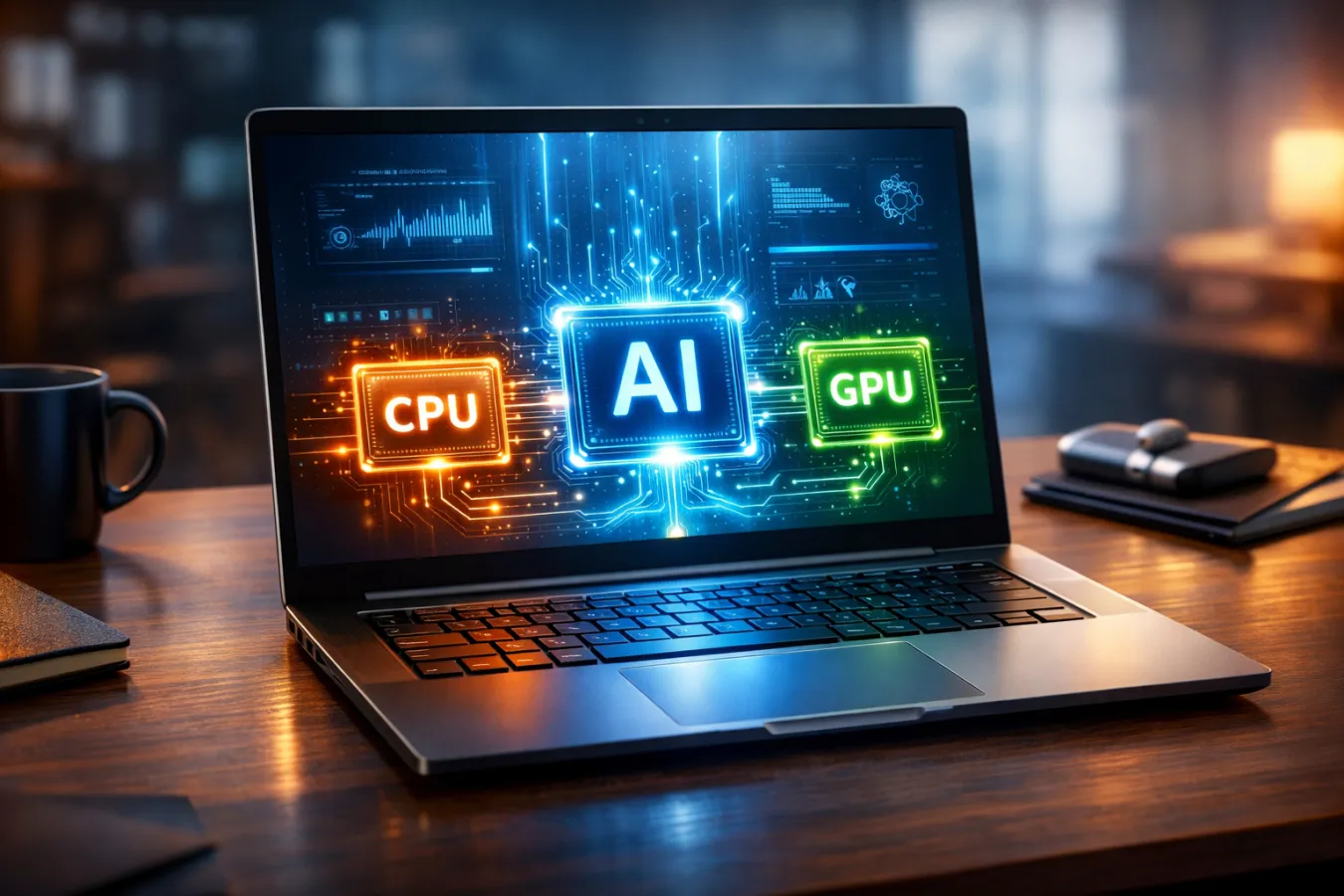
its hardware partners are shifting toward hybrid compute architecture—a
design approach that blends powerful CPUs, multi-core GPUs and dedicated AI
accelerators into a single, intelligent system.
This evolution is set to redefine professional laptops by
2027, focusing not just on raw performance, but on efficiency, adaptability
and smarter workflows.
What Is Hybrid Compute
Architecture?
Hybrid compute architecture refers to a system where
different types of processors work together, each handling tasks they are best
suited for:
- CPUs
manage general computing and system tasks
- GPUs
handle graphics-intensive workloads and parallel processing
- AI
accelerators (NPUs) process machine-learning tasks efficiently and
locally
Instead of overloading a single processor, workloads are dynamically
distributed, resulting in faster performance, lower power consumption and
longer battery life.
Why Microsoft Is Pushing Hybrid
Computing
Microsoft’s vision for the future of Windows centers on on-device
AI. By moving AI workloads directly onto laptops—rather than relying
entirely on cloud computing—Windows devices become:
- Faster
and more responsive
- More
energy-efficient
- More
secure, with sensitive data processed locally
Hybrid computing allows Windows to scale AI features
seamlessly across professional, creative and enterprise use cases.
Leading Brands Adopting Hybrid
Architecture
Several major laptop manufacturers are preparing
hybrid-compute Windows devices designed for advanced productivity and AI
workloads.
Dell XPS Series
The Dell XPS lineup is expected to push boundaries with:
- Precision-tuned
performance for creators and developers
- AI-optimized
multitasking
- Improved
thermal management for sustained workloads
HP Spectre & EliteBook
HP’s premium laptops focus on:
- Business-grade
security enhanced by machine learning
- AI-driven
power optimization
- Sleek
designs with long battery life for mobile professionals
Lenovo ThinkPad X1
Known for enterprise reliability, the ThinkPad X1 series is
evolving with:
- AI-assisted
workflow optimization
- Advanced
security features for corporate environments
- Hybrid
performance balancing power and portability
Key Features Expected in Hybrid
Windows Laptops
Dynamic Task Offloading
Tasks are automatically assigned to the most efficient
processor—CPU, GPU, or AI accelerator—without user intervention. This results
in:
- Smoother
multitasking
- Reduced
heat generation
- Extended
battery life
AI-Assisted Code Generation and Automation
Developers and professionals will benefit from:
- Real-time
AI suggestions in coding environments
- Automated
documentation and testing
- Intelligent
workflow shortcuts
These features significantly reduce repetitive tasks and
improve productivity.
Adaptive Security Powered by AI
Hybrid laptops will introduce advanced security layers such
as:
- Continuous
behavior-based threat detection
- AI-powered
biometric authentication
- Predictive
risk analysis to prevent breaches
Security will become proactive rather than reactive.
Battery Life and Efficiency Gains
One of the biggest advantages of hybrid compute architecture
is efficiency. AI accelerators consume far less power than CPUs or GPUs for
machine-learning tasks. By offloading these tasks intelligently, laptops can
achieve:
- All-day
battery life
- Consistent
performance without thermal throttling
- Better
longevity for hardware components
This makes hybrid Windows laptops ideal for mobile
professionals and enterprise users.
Why It Matters for the Future of
Windows PCs
Hybrid compute architecture represents a shift from
traditional performance metrics to intelligent performance. Users no
longer need to choose between power and portability—hybrid systems deliver
both.
By 2027, Windows laptops will function less like
conventional computers and more like adaptive work partners, learning
from user behavior and optimizing themselves in real time.
Final Thoughts
Windows laptops with hybrid compute architecture signal a
major transformation in personal computing. With powerful CPUs, advanced GPUs
and dedicated AI accelerators working in harmony, these devices are poised to
deliver smarter performance, enhanced security and superior efficiency.
As brands like Dell, HP and Lenovo roll out next-generation
devices, hybrid computing is set to become the new standard for professional
Windows laptops.

 Facebook
 Twitter
 Whatsapp
 Linkedin