Why ASML Is the Most Powerful Tech Giant
When people talk about the most influential technology
companies in the world, names like Apple, Google, Microsoft, or Nvidia usually
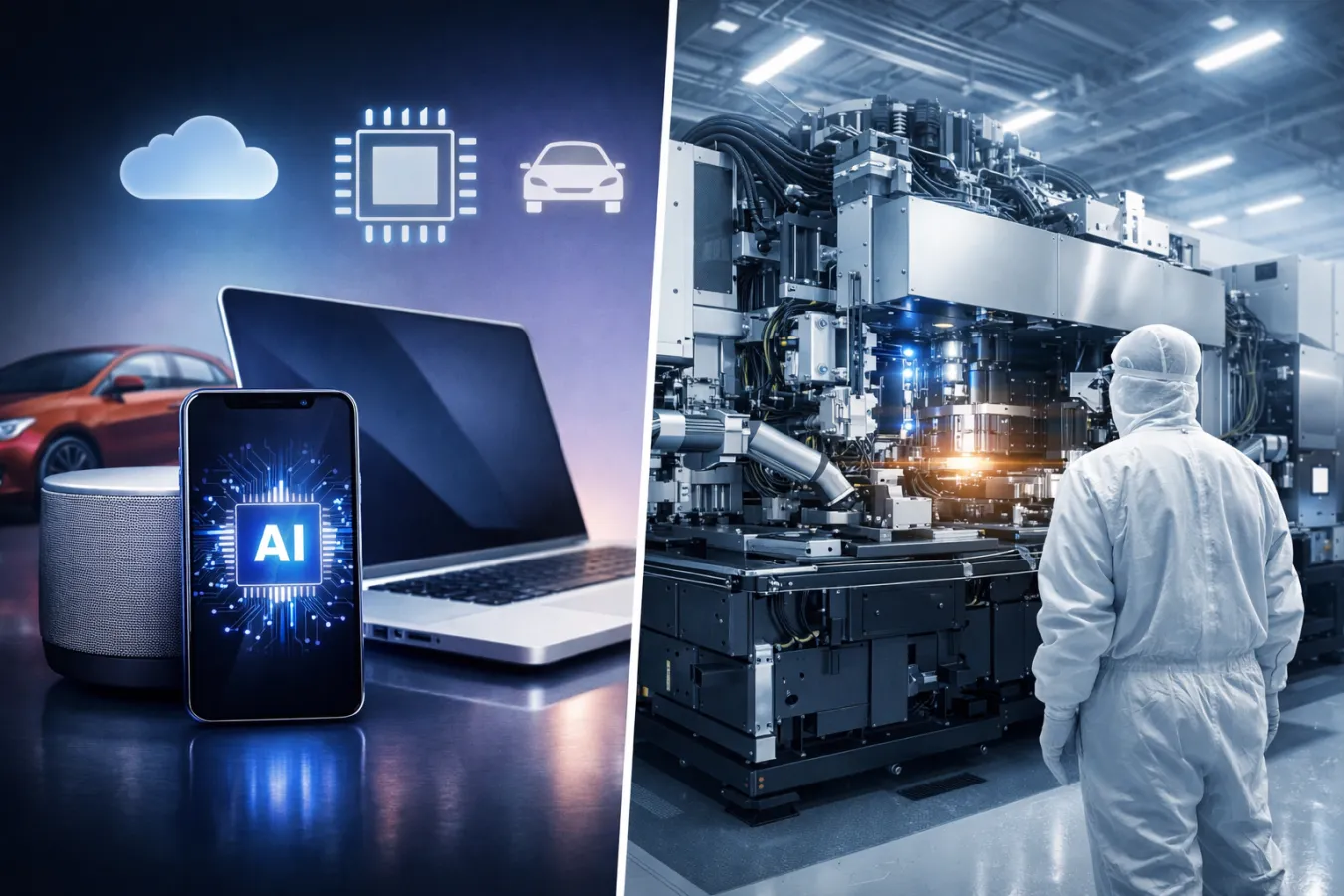
dominate the conversation. Yet behind every advanced smartphone, AI processor,
data center and autonomous vehicle sits a company most consumers have never
interacted with directly — ASML.
Based in the Netherlands, ASML Holding N.V. is one of the
most strategically important companies in the global technology ecosystem. It
does not design chips, manufacture consumer gadgets, or build popular software
platforms. Instead, ASML powers the very foundation of modern computing by
enabling how chips are made.
Without ASML, the global semiconductor industry would
struggle to function at today’s advanced level.
The Invisible Backbone of
Semiconductor Manufacturing
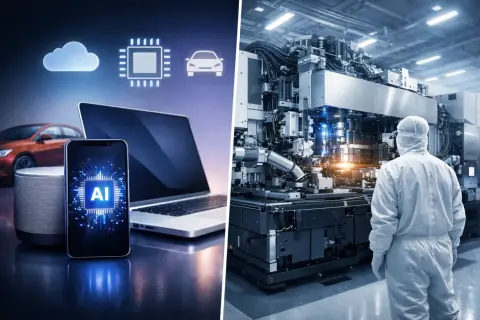
ASML specializes in advanced lithography systems, the
machines used to print microscopic circuit patterns onto silicon wafers. This
process is essential for creating modern semiconductors used in smartphones,
artificial intelligence systems, cloud computing infrastructure and electric
vehicles.
What makes ASML unique is its dominance in Extreme
Ultraviolet (EUV) lithography, a technology required to manufacture the
most advanced chips in the world. No other company has successfully
commercialized EUV at scale.
Each EUV machine is a technological marvel. These systems
cost hundreds of millions of dollars, take months to install and contain tens
of thousands of ultra-precise components. They are also absolutely
irreplaceable for producing cutting-edge chips at advanced process nodes.
A Quiet Monopoly in the Global
Chip Supply Chain
The semiconductor supply chain is one of the most complex
industrial systems ever built. At its center sits ASML.
Major chipmakers such as TSMC, Intel and Samsung rely
heavily on ASML’s machines to manufacture high-performance processors. Without
access to ASML’s lithography systems, even the most advanced chip designs
cannot be produced.
This dominance is not accidental. EUV technology took
decades of research, collaboration with specialized suppliers and billions in
investment. The level of precision involved — down to atomic-scale accuracy —
creates a barrier that competitors cannot easily overcome.
As a result, ASML controls one of the most critical choke
points in modern technology manufacturing.
ASML at the Center of Global Tech
Geopolitics
ASML’s importance extends far beyond business. The company
plays a central role in the ongoing technology power struggle between the
United States, China and Europe.
Advanced semiconductors are now viewed as strategic assets
tied to national security, economic competitiveness and military capability.
Because ASML’s machines are essential for producing leading-edge chips, access
to its technology has become a geopolitical issue.
Export controls and licensing restrictions have limited
ASML’s ability to sell certain advanced systems to China. These decisions are
shaped not only by market forces but also by international diplomacy and
government policy.
Few companies in the world operate at this intersection of
innovation, regulation and global power.
Engineering at the Edge of
Physics
The complexity of ASML’s technology is difficult to
overstate. EUV lithography relies on processes that push the limits of physics,
including generating extremely high-energy light and reflecting it using
mirrors polished to near-perfect smoothness.
ASML’s systems depend on a global network of highly
specialized partners, including precision optics manufacturers and advanced
materials suppliers. This tightly integrated ecosystem took decades to build
and cannot be easily replicated by competitors or governments.
The result is a level of technological leadership that is
both fragile and extraordinarily powerful.
Shaping the Future of Chip
Manufacturing
As demand for artificial intelligence, high-performance
computing and advanced electronics grows, the need for more powerful and
energy-efficient chips continues to rise. ASML is already preparing for the
next phase of semiconductor innovation.
The company is developing next-generation lithography
platforms designed to enable even smaller and more advanced chips. These
systems will support future breakthroughs in AI, autonomous vehicles, advanced
medical devices and industrial automation.
In many ways, ASML is not just supporting the future of
computing — it is defining what is technically possible.
Why You’ve Never Used ASML — Yet
Depend on It Every Day
Most people will never see an ASML machine and its name will
never appear on a smartphone box or laptop sticker. But nearly every modern
digital experience depends on chips manufactured using ASML technology.
From mobile processors and AI accelerators to cloud
infrastructure and advanced automotive systems, ASML’s influence is embedded
deep within the global technology stack.
Its power lies in being essential but invisible.
Conclusion
ASML represents a different kind of technology leadership —
one built on patience, precision and long-term vision rather than consumer
branding or hype.
As semiconductors continue to shape the future of global
innovation and geopolitical competition, ASML’s role will only grow more
critical. In an era where chips are the new strategic resource, ASML controls
the tools that make them possible.
That
is why ASML may be the most powerful tech company you’ve never used — but one
the world cannot function without.

 Facebook
 Twitter
 Whatsapp
 Linkedin