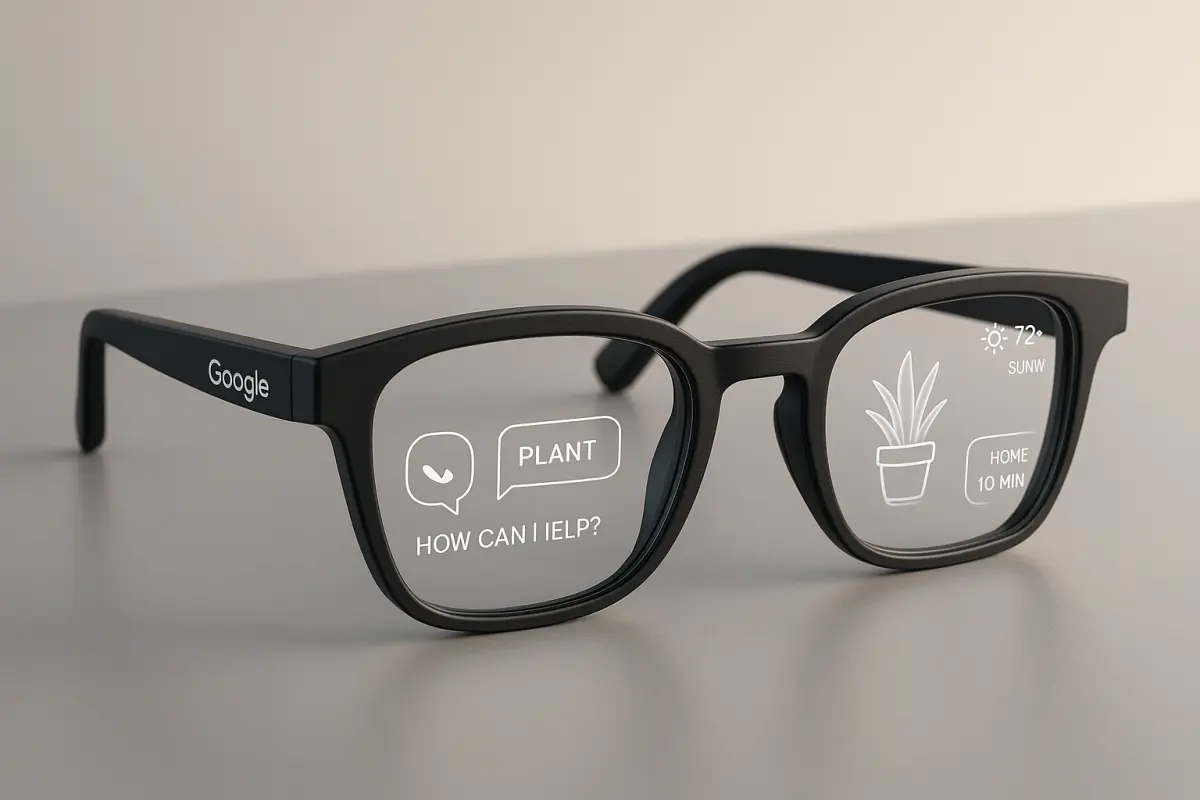
Google And Warby Parker AI Smart Glasses 2026
AI-driven smart glasses are rapidly emerging as one of the
eagerly awaited segments in consumer tech—and one of the major announcements
this year is from Google and Warby Parker, who disclosed their partnership, on
new lightweight AI smart glasses scheduled to launch in 2026.
The declaration occurred during The Android Show XR Edition,
representing the inaugural occasion the companies offered a definite release
schedule following earlier hints about the collaboration this year. As
enthusiasm for AI augmented reality and hands-free digital support surges
significantly this launch is set to be, among the most significant
technological events of 2026.
The Reason Google Is Returning to
Smart Glasses
Google’s involvement with glasses dates back to the initial
Google Glass, which was phased out almost ten years ago. However 2025 has
witnessed a revival, in AI wearables, driven by powerful momentum from:
- Meta’s
Ray-Ban smart eyewear, featuring AI audio, cameras and hands-free
operation
- Apple’s
Vision Pro, which transformed computing at the start of this year
- A
renewed consumer interest in screen-free AI devices
Google aims to rejoin this rapidly expanding sector by
leveraging a developed ecosystem—driven by Android XR, Gemini AI and a
style-conscious design strategy, from Warby Parker.
What Distinguishes These New AI
Glasses?
Google and Warby Parker seek to provide eyewear that
combines fashion with cutting-edge AI features, an achievement that earlier
smart glasses found challenging.
– Anticipated primary attributes:
1. Lightweight Design
Warby Parker is recognized for its minimalist eyeglasses,
which makes these smart glasses more attractive for everyday use, than the
larger AR headsets.
2. Gemini AI Integration
– Google’s multimodal AI system is set to enable:
- Real-time
information retrieval
- Natural
voice interaction
- Hands-free
controls using cameras and microphones.
3. Two Device Types
Google announced that the program features two types of
glasses:
AI
Glasses (Screen-Free Assistance) Designed for everyday use, featuring:
- 1.
Built-in speakers
- 2.
Microphones
- 3.
Front-facing cameras
- 4.
Seamless voice interaction with Gemini
- Display AI Glasses (In-Lens Display) Featuring a discreet display capable of showing:
- Navigation
directions
- Translation
captions
- Notifications
- Real-time contextual information
This places Google and Warby Parker directly into
competition with Meta’s Ray-Ban AI glasses and adds a fresh alternative to the
growing AR wearable ecosystem.
Why Warby Parker Is the Perfect
Partner
Warby Parker offers a quality frequently missing from tech
firms—widely accessible eyewear knowledge.
Their participation addresses an issue:
Individuals desire eyewear that resembles regular glasses
rather than technological gadgets.
– This collaboration additionally paves the way for:
- Mainstream
retail distribution
Any of these factors might render these glasses
significantly more available, than smart eyewear efforts.
Smart Glasses Are Emerging as the Upcoming Major Consumer
Technology Trend
With a growing number of consumers turning to AI assistants,
wearable devices and hands-free digital engagement smart glasses are becoming
the progression, from smartphones.
– More and more individuals look up phrases such, as:
- augmented
reality glasses 2026
This indicates an increasing demand, for gadgets that
minimize screen exposure while maintaining communication.
Technology experts forecast that glasses driven by AI
technology will become one of the transformative product segments, within the
coming two years—much like the impact smartphones had on technology in the late
2000s.
What Remains Unclear
– Warby Parker and Google have not disclosed any information
yet regarding:
- Subscription
or AI service plans
However with a 2026 launch approaching additional details
are anticipated during 2025. The early part of 2026.
The Bottom Line
The collaboration between Google and Warby Parker paves the
way for a transformation, in the way individuals interact with AI and augmented
reality.
– These upcoming AI-powered smart glasses promise to
combine:
If they succeed smart glasses might transition from devices
to essential everyday accessories.
As the competition intensifies—with Apple, Meta, Samsung,
and Google all investing heavily—the year 2026 may mark the true beginning of
the AI wearable revolution.

 Facebook
 Twitter
 Whatsapp
 Linkedin