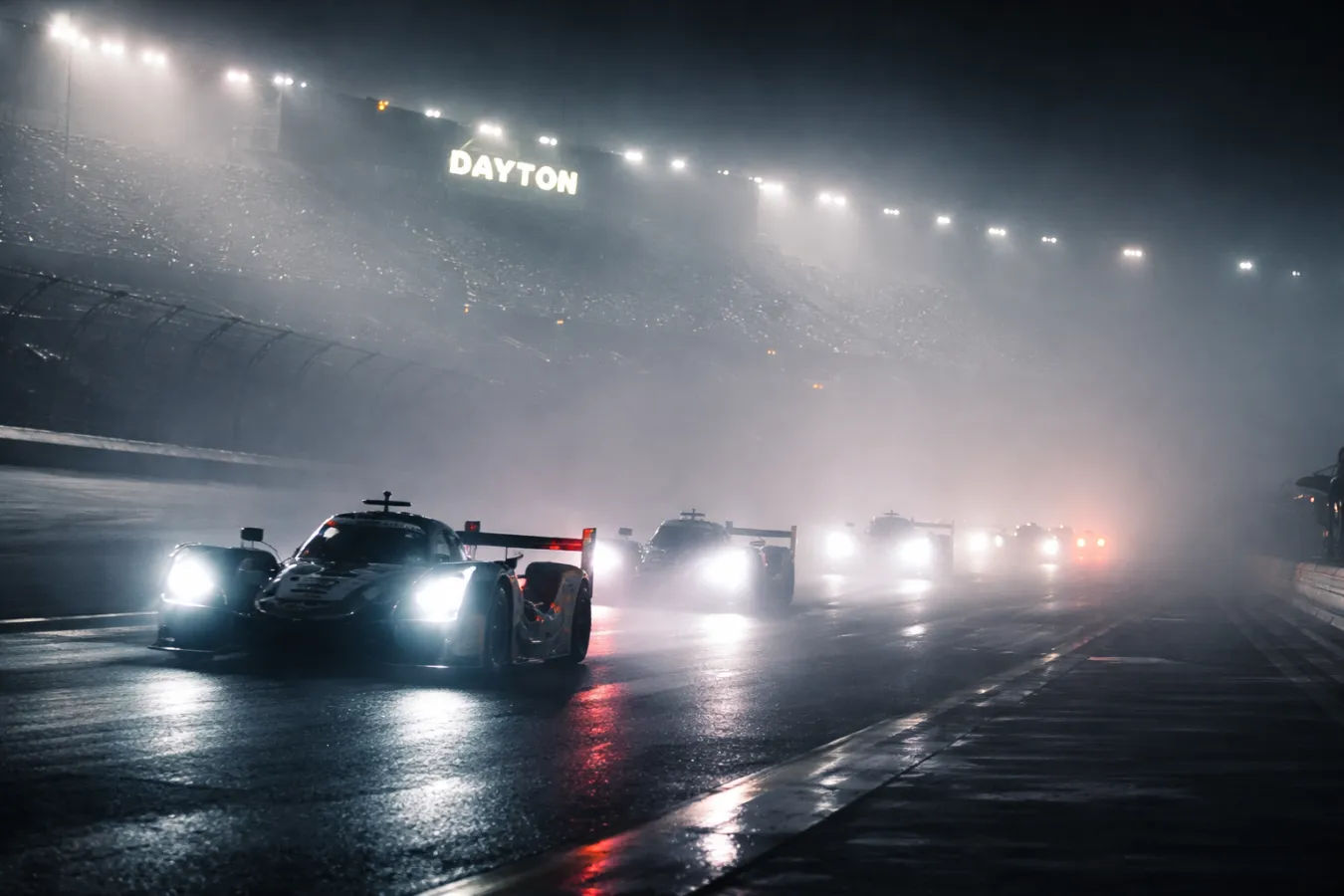
Fog Halts Daytona as Rolex 24 Hits Halfway
Daytona International Speedway has a way of turning
endurance racing into pure atmosphere. Even when the cars are running clean,
the race feels like it’s always building toward something unexpected—one moment
of chaos, one mechanical surprise, one shift in weather that changes
everything. Halfway through the 64th running of the Rolex 24 At Daytona, that
“something†arrived in dramatic fashion as fog rolled into the speedway under
the cover of darkness, forcing teams, drivers and race control to react instantly.
In a race that already demands flawless execution for a full
day and night, the fog became a reminder of one of endurance racing’s oldest
truths: the track is never the only opponent.
A Calm Rhythm, Until It Wasn’t
For long stretches of the opening half, the Rolex 24 settled
into a familiar endurance pattern. The field was still packed with contenders,
the leaders were trading positions through pit cycles and the real battles were
happening not only on the track but also on timing screens and strategy charts.
The early hours at Daytona are often deceptive. They look
like a sprint on television—cars slicing through traffic at high speed,
prototypes and GT machines separated by inches—but the smart teams are already
thinking ahead. They’re protecting tires, managing fuel windows, avoiding
unnecessary risks and keeping their cars clean while waiting for the race to
come to them.
As daylight faded and the circuit lit up under stadium-style
floodlights, the race entered its most iconic phase: the Daytona night. Drivers
rely heavily on reference points, braking markers and the rhythm of corner
entry and exit. Spotters guide them through traffic. Engineers monitor lap time
trends and adjust plans based on tire wear, fuel consumption and changing track
temperatures.
Everything seemed set for a steady push into the second
half—until visibility began to drop.
Fog Arrives Like a Curtain
Fog doesn’t announce itself with the same drama as a crash
or an engine failure. It doesn’t throw debris across the track. It doesn’t
produce instant yellow flags because of contact. Instead, it creeps in quietly,
slowly at first, then suddenly all at once.
That’s what made the moment so striking at Daytona. As the
race approached its halfway point, fog began to form and drift across parts of
the speedway. Under the lights, it created a surreal glow—headlights cutting
through mist, brake lights flickering like red sparks and the racing surface
fading into a gray haze.
At Daytona’s speeds, even a small reduction in visibility
becomes a serious safety concern. Drivers need to see far enough ahead to react
to slower traffic, avoid incidents and hit braking zones precisely. Prototypes
in particular close gaps quickly and with multiple classes sharing the same
racing line, the danger multiplies when sightlines disappear.
Race control had a decision to make: keep the race running
and hope the fog remained manageable, or slow things down to protect drivers
and teams.
The fog didn’t leave much room for debate.
Race Control Steps In
As conditions worsened, the action was neutralized. The
field slowed under caution and the entire race shifted into survival mode. The
speedway that had been roaring at full volume now felt muted, as if someone had
turned down the sound of the night.
For fans watching, it was a moment that captured the
unpredictability of endurance racing. This wasn’t a strategic caution triggered
by debris or a spin. This was nature taking control of one of the biggest
events in motorsport.
And for the teams, it triggered a rapid chain reaction.
Strategy Gets Rewritten in Real
Time
A weather-related caution changes more than pace. It changes
the math.
When the race slows, fuel consumption drops. Tire wear
decreases. Gaps between cars shrink. Lead margins disappear. Pit windows shift.
Drivers who were expected to stay in the car for another 30 minutes might
suddenly be swapped early, depending on what the team expects to happen next.
On pit lane, the calm routines of endurance racing—fuel,
tires, driver change, go—turned into a fast-moving strategy debate.
Some teams chose to pit immediately, taking advantage of the
slower running to make service stops with less time loss. Others stayed out,
hoping to gain track position when the race returned to green. Engineers
studied timing screens and calculated whether it was smarter to commit to a
full stop now or wait until the restart.
In a 24-hour race, the “right†call isn’t always obvious in
the moment. A decision that looks perfect at midnight can look disastrous at
sunrise.
Fog doesn’t just slow the track. It speeds up the pressure.
The Driver’s Challenge: Racing
Without Vision
Even with caution conditions, driving in fog at Daytona is
mentally exhausting. The mist plays tricks on depth perception. Lights reflect
off moisture and create glare. Reference points disappear. Corners feel longer
or shorter than they really are. Drivers must remain alert even when the pace
is reduced because the danger of unexpected contact remains high.
For multi-class racing, the challenge grows. A faster car
approaching a slower class might not see it until the last moment. A GT driver
might struggle to judge the closing speed of a prototype behind them. And any
sudden braking or line change can create a chain reaction.
Endurance racing is often described as a test of patience.
Fog turns that patience into a necessity.
The best drivers in these conditions are not always the
fastest—they’re the ones who stay calm, communicate clearly with their teams
and avoid making emotional decisions when the track feels uncertain.
The Psychological Side of a
Midnight Pause
The fog interruption didn’t just change the race outside the
cars. It changed the race inside the teams.
A long endurance event has its own emotional rhythm. Drivers
and crew members settle into routines. Engineers focus on trends. Mechanics
prepare for scheduled service. When the race is interrupted, that rhythm breaks
and everyone must adapt.
For some teams, it’s an opportunity. A chance to reset,
review the car and plan the next phase. For others, it’s frustrating—especially
if they were in a strong position and building momentum.
And for teams that had just completed a pit stop before the
caution, it can feel like bad luck. The gap they created through strategy may
vanish in minutes.
But luck is part of Daytona. Every team knows it going in.
Why Fog Is So Dangerous at
Daytona
Daytona International Speedway is unique because it combines
high-speed banking with an infield road course. That means cars are constantly
transitioning between extreme speed and heavy braking zones.
Fog tends to be most threatening in those transitions.
Drivers come off the banking at high speed and need a clear view of the braking
area. If the fog thickens there, the margin for error becomes razor-thin.
The infield can also hold moisture differently than the open
banking sections. Some corners may be clear while others are covered, creating
inconsistent conditions from one part of the lap to the next.
That inconsistency is what makes fog so unsettling. Drivers
can’t build full confidence because the track changes every few seconds.
The Restart: When the Race Wakes
Up Again
Eventually, conditions improved enough for racing to resume.
But even after the fog began lifting, the effects remained.
A caution restart at Daytona is always intense. The field is
packed. Traffic is immediate. Drivers are hungry to regain positions they lost
through pit strategy. And teams know that the next few laps can define the
entire night.
The first green laps after a weather interruption often feel
like a fresh race. Drivers are cold, tires are not fully up to temperature and
the intensity jumps instantly.
This is where discipline matters most.
A single mistake can erase twelve hours of work.
The Fog Becomes Part of the Story
In a race as long as the Rolex 24, it’s rare for one moment
to define the entire event. But some moments become symbols—snapshots that
people remember long after the trophy is handed out.
The fog at the halfway mark became one of those moments.
It was dramatic without being chaotic. It was tense without
needing a crash to create it. It reminded everyone watching that endurance
racing isn’t only about horsepower and lap times. It’s about adapting to the
unexpected and staying sharp when conditions aren’t perfect.
It also gave the race a cinematic quality that Daytona does
better than almost anywhere else. Lights cutting through mist. Cars moving like
shadows. A track that looked more like a scene from a film than a motorsport
event.
What Happens Next in a 24-Hour
Race
Once the fog clears, the race doesn’t slow down
emotionally—it speeds up. The second half of the Rolex 24 is where the real
pressure begins to build.
Teams start thinking about the finish rather than simply
surviving the night. Drivers push harder. Pit strategies become more
aggressive. And every small issue—minor damage, a slow pit stop, a small
penalty—becomes more costly.
The fog was a reminder that the race can change at any
moment, even without contact.
As the
Rolex 24 pushed beyond the halfway point, the mission for every team remained
the same: stay clean, stay smart and stay ready.

 Facebook
 Twitter
 Whatsapp
 Linkedin