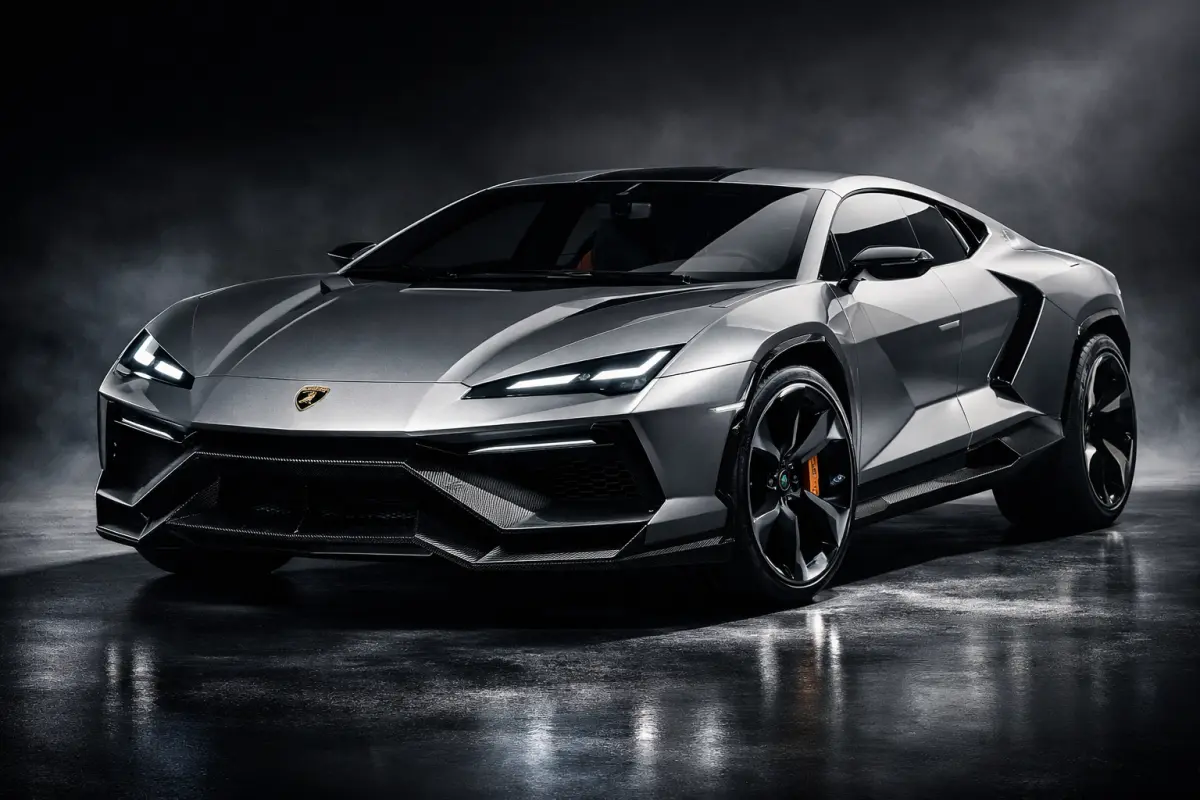
Lamborghini Cancels First EV Launch Plan
In a move that has surprised both enthusiasts and industry analysts, Lamborghini has decided to scrap the launch of its first fully electric vehicle (EV), signaling a strategic pause in its battery-electric ambitions. The Italian supercar maker, known for its roaring V12 engines and dramatic styling, has instead chosen to pivot toward plug-in hybrid technology — at least for now.
At the center of this shift is the Lamborghini Lanzador, a high-riding, ultra-GT concept originally unveiled as a bold preview of the brand’s electric future. What was once presented as Lamborghini’s groundbreaking leap into the EV space will now evolve into a plug-in hybrid model rather than a fully electric one.
The decision reflects deeper realities about cost, customer demand, brand identity and the challenges of electrifying high-performance supercars.
Why Lamborghini Stepped Back from a Full EV
The primary reason behind Lamborghini’s decision appears to be economic pragmatism. Developing a fully electric supercar is extraordinarily expensive. From battery architecture and performance tuning to thermal management and lightweight materials, EV development demands massive upfront investment — especially when performance expectations are sky-high.
Unlike mass-market automakers that can spread EV development costs across millions of vehicles, Lamborghini operates in a low-volume, high-margin niche. Every model must not only perform exceptionally but also preserve the exclusivity and emotional appeal that customers expect. Investing billions into EV technology without clear demand from its core buyers could significantly impact profitability.
Calling full EV development an “expensive hobby” underscores a crucial point: luxury brands cannot justify massive R&D expenses unless customers are ready to embrace the product in meaningful numbers.
The Supercar Buyer Problem
Lamborghini’s clientele are not typical car buyers. They seek:
Electric vehicles deliver astonishing acceleration and torque, but they lack the signature roar of a naturally aspirated V10 or V12. For a brand built on spectacle, silence can feel like compromise.
Early feedback from dealers and customers reportedly indicated that while electrification is accepted in hybrid form, a fully electric Lamborghini might not yet resonate with buyers. Wealthy enthusiasts still associate the brand with combustion power and mechanical intensity.
In this context, launching a pure EV too soon could risk diluting the brand’s identity.
The Hybrid Compromise
Rather than abandoning electrification entirely, Lamborghini is leaning into plug-in hybrid (PHEV) technology. This approach offers several advantages:
Performance Boost – Electric motors can enhance acceleration and torque vectoring.
Regulatory Compliance – Lower emissions help meet tightening global standards.
Brand Continuity – Combustion engines remain part of the driving experience.
Lower Development Risk – Hybrid platforms build upon existing architectures.
Hybrids serve as a bridge between tradition and transformation. They allow Lamborghini to experiment with electrification while retaining the emotional elements that define the brand.
Recent models have already demonstrated how effectively hybrid systems can enhance performance rather than diminish it. Instant torque fill, improved traction and energy recovery systems can elevate driving dynamics when engineered properly.
Timing Matters in the EV Transition
The broader automotive industry is undergoing rapid electrification. However, not all segments move at the same pace. Luxury and hyper-performance brands face unique challenges:
Heavy battery packs conflict with lightweight performance goals.
EV platforms require entirely new design philosophies.
Charging infrastructure varies globally.
Resale values and collector interest remain uncertain.
Mainstream automakers must electrify to meet fleet emission targets. Lamborghini, by contrast, operates in small volumes where regulatory flexibility sometimes applies. That gives it slightly more room to choose timing strategically.
The brand appears to be betting that EV technology — particularly battery energy density and weight reduction — will improve significantly in the coming years. Waiting could result in a better product with less compromise.
Financial Strategy Over Headlines
The automotive world is full of bold announcements, but profitability ultimately determines sustainability. For Lamborghini, which has posted strong recent performance in sales and revenue, protecting margins is crucial.
A failed or underwhelming EV launch could:
Pivoting early avoids these risks. Instead of forcing an EV into a market that may not be fully ready, Lamborghini is choosing a phased evolution.
This is not retreat — it’s recalibration.
Can an Electric Lamborghini Ever Feel “Right”?
The deeper question isn’t whether Lamborghini can build an EV. Technically, it absolutely can. Electric motors already outperform combustion engines in many measurable metrics:
Instant torque
Linear power delivery
Precise traction control
Fewer mechanical losses
But Lamborghini isn’t just about numbers.
The brand thrives on emotional overload: engine noise echoing through tunnels, dramatic gear shifts, raw vibrations and theatrical presence. Replicating that sensation in an electric vehicle requires creativity — possibly through artificial sound engineering, active feedback systems, or entirely new forms of performance engagement.
Electric supercars may eventually create their own emotional language. But that transition must feel authentic, not forced.
The Role of Parent Company Resources
Lamborghini benefits from being part of a larger automotive group with extensive EV research and platform development capabilities. That means when the time is right, the company won’t be starting from scratch.
For now, leveraging hybrid technology allows Lamborghini to stay aligned with broader electrification goals while refining what an eventual full EV should look and feel like.
The advantage of waiting is learning — observing how the EV market matures, how competitors fare and how customer preferences evolve.
What This Means for the Future
The shelving of Lamborghini’s first EV doesn’t mean electrification is dead for the brand. It means timing is everything.
Expect the following over the next decade:
A fully hybridized lineup
Continued refinement of plug-in systems
Exploration of lightweight battery innovations
A carefully timed debut of a pure EV once demand solidifies
For collectors and enthusiasts, this decision may come as relief. Combustion engines are not disappearing from Lamborghini’s lineup overnight. The iconic soundtrack and mechanical drama remain intact — for now.
For the broader EV movement, however, it’s a reminder that adoption curves vary across segments. Ultra-luxury brands operate under different pressures than mass-market manufacturers.
Final Thoughts
Lamborghini’s decision to scrap its first EV launch highlights the tension between innovation and identity. Electrification is inevitable across the automotive industry, but how and when brands transition matters deeply.
By calling full EV development an “expensive hobby” at this stage, Lamborghini is acknowledging economic realities and customer sentiment. The company is choosing measured progress over symbolic gestures.
Hybrids represent the middle ground — a way to evolve without abandoning the emotional DNA that defines the raging bull.
Whether Lamborghini eventually delivers a fully electric masterpiece remains to be seen. But when it does, it will likely arrive not as an experiment, but as a statement — engineered not just for compliance, but for passion.
And for a brand built on passion above all else, that timing may make all the difference.

 Facebook
 Twitter
 Whatsapp
 Linkedin