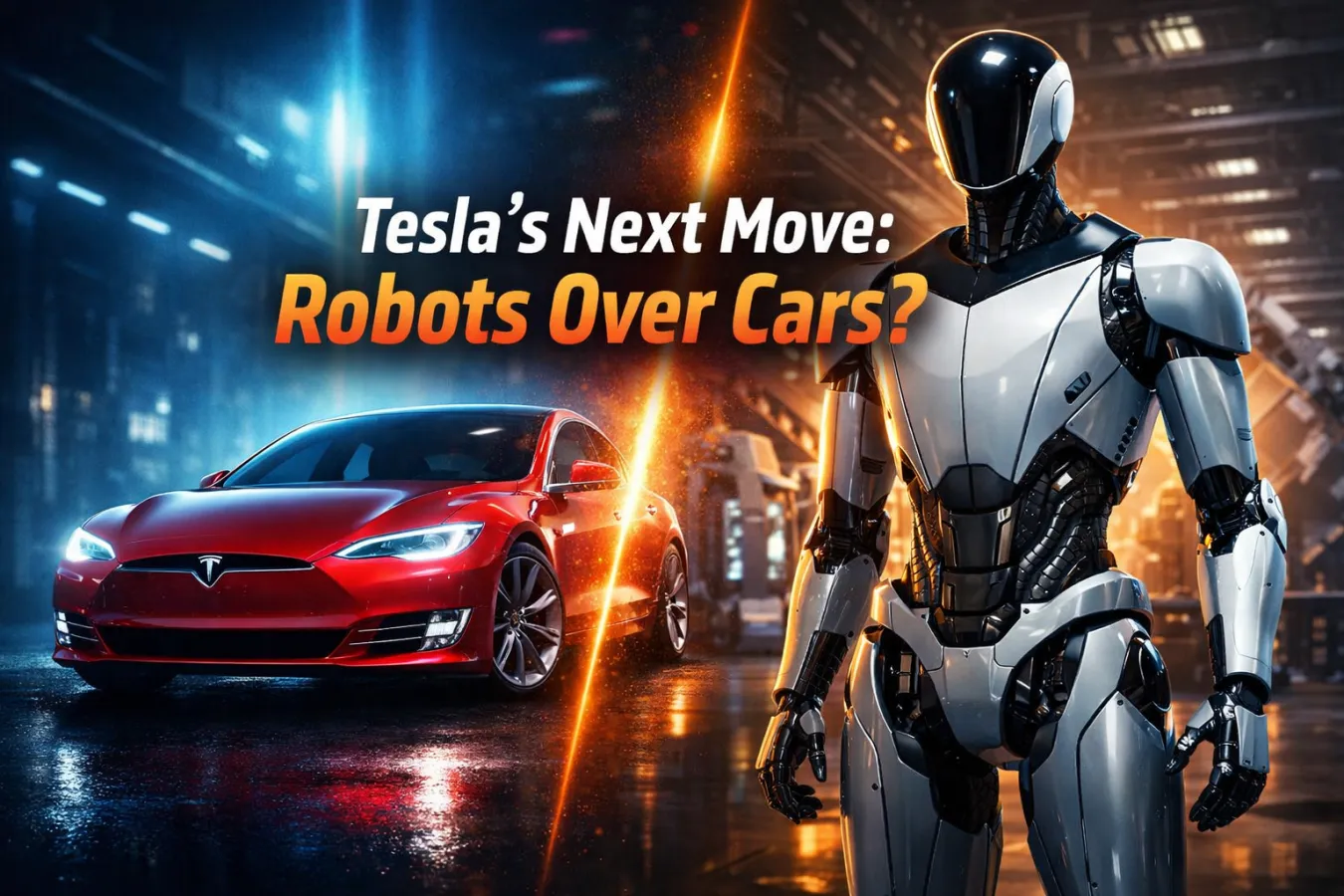
Tesla Eyes Killing Model S/X for Optimus Bots
In the world of disruptive innovation, few companies generate as much speculation and excitement as Tesla. Known for reshaping the electric vehicle (EV) market and pushing the boundaries of autonomous driving, Tesla has built its reputation on bold decisions that often defy traditional automotive logic. Now, a provocative idea is gaining traction across industry discussions: Tesla could eventually phase out the Model S and Model X to focus resources on building Optimus humanoid robots.
While no official announcement has confirmed such a move, the possibility reflects a broader shift in Tesla’s long-term strategy—from being primarily an automaker to becoming a robotics and artificial intelligence powerhouse. If this transition happens, it could redefine not only Tesla’s future but also the global technology landscape.
The Legacy of the Model S and Model X
When the Model S debuted, it fundamentally challenged the perception that electric vehicles were slow, unattractive and impractical. It offered luxury-level comfort, industry-leading range and software-driven features that traditional automakers struggled to match. The Model X followed with futuristic Falcon Wing doors and impressive performance, further cementing Tesla’s position as a premium EV manufacturer.
However, the automotive market has evolved dramatically since those vehicles first launched. Today, competition in the premium EV segment is fierce. Legacy manufacturers and new startups alike are delivering electric SUVs and sedans with comparable range, advanced driver assistance and increasingly sophisticated interiors.
Meanwhile, Tesla’s own lineup has shifted toward higher-volume vehicles such as the Model 3 and Model Y. These models dominate global EV sales and provide the company with stronger margins through scale manufacturing. Against this backdrop, the Model S and Model X occupy a smaller niche—prestige products that showcase engineering excellence but contribute less to overall production numbers.
Why Tesla Might Move On
From a business perspective, companies must constantly evaluate where their capital and talent generate the greatest return. Producing luxury vehicles in relatively low volumes can be resource-intensive, especially when manufacturing complexity is high.
Humanoid robots, on the other hand, represent a potentially massive market.
Optimus—the robot Tesla has been developing—aims to handle repetitive, dangerous, or physically demanding tasks. Early demonstrations have shown capabilities such as walking, sorting objects and performing basic factory operations. While the technology is still evolving, the long-term vision is enormous: robots assisting in warehouses, supporting elder care, working in construction and even helping with household chores.
If Tesla believes robotics could become a multi-trillion-dollar industry, reallocating engineers, manufacturing capacity and AI expertise begins to look less like a gamble and more like a calculated pivot.
Manufacturing Priorities Are Changing
Tesla has repeatedly demonstrated its willingness to overhaul production strategies. Gigafactories were built to streamline battery manufacturing and vehicle assembly at unprecedented scale. Now imagine those same facilities producing humanoid robots instead of low-volume luxury cars.
Robots could eventually be manufactured using many of the same principles that made Tesla vehicles competitive: vertical integration, automation and software-first design. In fact, Tesla’s experience with electric motors, battery packs, sensors and AI chips may give it a unique advantage in robotics manufacturing.
Another critical factor is labor economics. If robots can build products—including other robots—the cost curve could drop dramatically over time. Tesla has often emphasized the importance of manufacturing innovation as the real driver of technological leadership. Optimus fits neatly into that philosophy.
AI Is the Real Engine Behind the Shift
At the heart of both Tesla vehicles and Optimus robots lies artificial intelligence. The neural networks that enable driver assistance and autonomy rely on massive datasets, high-performance computing and continuous software training.
Transitioning focus from luxury vehicles to robotics would allow Tesla to concentrate its AI resources on a broader range of real-world tasks. Instead of teaching machines only how to navigate roads, Tesla could train them to understand human environments—factories, offices and homes.
This is a far more complex challenge, but it also offers far greater upside.
Consider the scalability: a successful robot platform could be deployed across industries worldwide. Unlike cars, which consumers typically replace every several years, robots could become essential operational infrastructure for businesses.
Financial Logic Behind the Idea
Luxury vehicles generate strong brand value, but robotics could unlock recurring revenue streams. Imagine companies paying subscription fees for software updates, automation packages, or fleet management services for their robot workforce.
Tesla has already experimented with software-driven revenue through features like premium connectivity and driver-assistance subscriptions. Extending this model to robotics could produce predictable, long-term cash flow.
Investors often reward companies that demonstrate clear pathways toward scalable technology platforms. If Tesla convinces the market that Optimus is more than a science experiment—that it is a viable commercial product—the financial incentive to prioritize robots over niche vehicles becomes obvious.
Risks Tesla Cannot Ignore
Of course, abandoning flagship vehicles is not without consequences.
The Model S and Model X symbolize Tesla’s technological prestige. Removing them could create a perception gap in the luxury segment, allowing competitors to capture high-end buyers seeking innovation and status.
There is also execution risk. Humanoid robots remain an emerging technology with unresolved engineering challenges. Battery efficiency, dexterity, safety protocols and real-world reliability must all improve before mass adoption becomes realistic.
Additionally, regulatory frameworks for autonomous machines operating around humans are still developing. Governments may impose strict standards that slow deployment.
Tesla thrives on ambitious timelines, but robotics may demand patience on a scale even the company has rarely faced.
A Strategic Evolution, Not a Retreat
If Tesla ultimately retires the Model S and Model X, it would not necessarily signal weakness. Instead, it could represent strategic maturity—an acknowledgment that the company’s future lies beyond automobiles.
Tesla has often described itself not merely as a car company but as a technology enterprise focused on sustainable energy and intelligent machines. Robots align naturally with that identity.
Moreover, Tesla doesn’t need luxury sedans to prove engineering credibility anymore. Its brand is already synonymous with innovation. The next frontier may simply require a different kind of product.
What This Means for the Industry
Should Tesla double down on robotics, competitors will likely follow. Just as traditional automakers accelerated their EV programs in response to Tesla’s early success, major technology firms and manufacturers could ramp up humanoid robot development.
The ripple effects could transform labor markets, supply chains and productivity models worldwide.
Factories might operate with minimal human intervention. Hazardous jobs could become safer. Aging populations in many countries might receive support from robotic caregivers. Entirely new service categories could emerge.
In that sense, the decision would extend far beyond Tesla—it could mark the beginning of a robotics-first economic era.
The Bigger Picture
Whether or not Tesla actually phases out the Model S and Model X in the near future, the conversation itself highlights a profound shift in technological ambition. Cars electrified transportation. Robots could redefine work.
Tesla has never been content with incremental progress. Its history suggests a pattern: identify a massive industry, challenge its assumptions and rebuild it around software and scalable hardware.
If Optimus delivers on even a fraction of its promise, the company may view luxury vehicles as stepping stones rather than destinations.
The question is no longer whether Tesla can build great cars—it already has. The real question is whether it can build machines that reshape everyday human activity.
And if that future demands saying goodbye to iconic vehicles, Tesla may be more than willing to make the trade.

 Facebook
 Twitter
 Whatsapp
 Linkedin