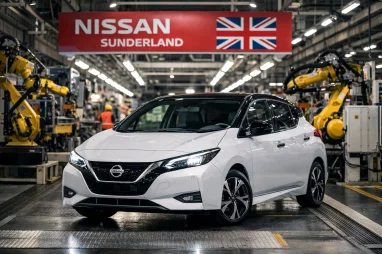
Nissan Starts New Electric LEAF Production UK
Nissan has officially begun production of its third-generation
electric Nissan LEAF at its Sunderland manufacturing facility in northeast
England, marking a defining moment for both the company and the wider UK
electric vehicle (EV) industry. The move reinforces the country’s
commitment to clean mobility and strengthens Sunderland’s position as one of
Europe’s most important EV manufacturing hubs.
As governments push for decarbonisation and consumers
increasingly turn toward electric cars, Nissan’s latest investment sends a
clear signal: electric vehicle manufacturing in the UK still has strong
momentum.
A New Era for Nissan and UK EV
Manufacturing
The Sunderland plant, Nissan’s flagship European
manufacturing site, is the largest car factory in Britain, employing
around 6,000 workers and supporting tens of thousands more across the
automotive supply chain. With the start of production of the new LEAF, the
factory enters a new chapter focused firmly on electric and low-emission
vehicles.
Originally launched in 2010, the Nissan LEAF became the
world’s first mass-market electric vehicle and played a crucial role in
normalising EV ownership. The third-generation model builds on that legacy,
combining modern design, extended driving range, and cutting-edge digital
technology to compete in an increasingly crowded EV market.
Nissan has invested more than £450 million to retool
the Sunderland facility for advanced EV production, including over £300
million directly into UK operations. This investment covers upgraded
production lines, enhanced battery integration processes, and digital
manufacturing systems that align with Nissan’s global electrification roadmap.
This decision reflects long-term confidence in UK
automotive manufacturing, despite recent challenges facing the European car
industry, including rising costs, global competition, and the shift away from
petrol and diesel vehicles.
Sunderland: The Beating Heart of
Britain’s EV Industry
Sunderland’s importance goes far beyond a single model. The
site has the theoretical capacity to produce up to 600,000 vehicles per year,
making it one of the most strategically important automotive facilities in
Europe.
While output dipped in recent years due to supply-chain
disruptions and weaker demand across Europe, the launch of the new LEAF is seen
as a stabilising and growth-driven moment for the factory.
Industry leaders and policymakers have described the
production start as a “huge vote of confidence†in the North East
economy. The move helps safeguard skilled manufacturing jobs and reinforces the
region’s reputation as a centre for advanced automotive engineering and EV
innovation.
Electric Nissan LEAF 2026: Specs,
Range, and Technology
The third-generation Nissan LEAF has been significantly
re-engineered to meet modern EV expectations and growing competition from both
European and Chinese manufacturers.
Key Specifications at a Glance
- Driving
Range:
Up to 386 miles (WLTP)
on a single charge, placing it among the most efficient electric cars in
its segment.
- Battery
Capacity:
A 75 kWh lithium-ion battery,
designed for longer journeys and reduced range anxiety.
- Charging
Capability:
Supports fast charging up to
150 kW, enabling rapid top-ups on long trips and improved convenience
for urban drivers.
- Estimated
Price:
Starting from around £32,249,
making it competitive in the mid-range EV market.
- Government
Incentives:
Qualifies for the full £3,750
UK Electric Car Grant, improving affordability for consumers switching
from petrol or diesel vehicles.
Smart Tech, Connectivity, and
Driver Assistance
Beyond range and performance, Nissan has focused heavily on digital
experience and safety technology.
The new LEAF features:
- Google-built
infotainment system with integrated navigation, voice commands, and
real-time traffic updates
- Advanced
driver-assistance systems (ADAS), including adaptive cruise control,
lane-keeping assist, and collision avoidance
- Over-the-air
(OTA) software updates to improve vehicle features throughout ownership
These upgrades ensure the LEAF remains competitive against
newer EV rivals while appealing to tech-savvy buyers seeking connected,
intelligent vehicles.
Why This Matters: Economic Impact
and EV Manufacturing Growth
Nissan’s Sunderland investment goes far beyond a single
product launch. It plays a critical role in shaping the future of EV
manufacturing in the UK.
✅ Boosting Jobs and the Supply Chain
The production of the new LEAF supports:
- Thousands
of direct manufacturing jobs
- A
wider network of UK-based suppliers, logistics firms, and component
manufacturers
- Skills
development in EV assembly, battery technology, and digital manufacturing
This ripple effect strengthens regional economies and helps
future-proof jobs as the industry transitions away from internal combustion
engines.
✅ Strengthening the UK’s Position in the Global
EV Market
The LEAF is the first high-volume mass-market EV produced
in the UK since 2020, reinforcing Britain’s ability to compete globally in
electric car production.
At a time when countries are racing to secure EV investment,
Nissan’s commitment positions the UK as:
- A
viable alternative to EU manufacturing hubs
- A
strategic base for exporting electric vehicles across Europe
- A
key player in the global shift toward zero-emission transport
✅ Supporting the EV36Zero Vision
The Sunderland plant sits at the centre of Nissan’s EV36Zero
initiative, a long-term strategy that integrates:
- Electric
vehicle production
- Battery
manufacturing through nearby gigafactories
- Renewable
energy generation
This ecosystem approach reduces emissions across the vehicle
lifecycle and supports the UK’s net-zero climate targets.
Sustainability and the Green
Transition
The new LEAF is not just about performance and profit — it
represents a broader environmental transition.
Nissan has aligned Sunderland’s operations with
sustainability goals, including:
- Increased
use of renewable energy at the plant
- Reduced
manufacturing waste
- Lower
carbon emissions across production processes
As governments move closer to banning new petrol and diesel
cars later this decade, such initiatives place Nissan in a strong position to
adapt to future regulations and consumer expectations.
Future Outlook: What Comes After
the LEAF?
The launch of the third-generation LEAF may be just the
beginning.
Nissan has previously indicated that Sunderland could play a
central role in producing:
- New
electric crossovers
- Fully
electric versions of popular models like the Qashqai and Juke
- Vehicles
for strategic global partners
Final investment decisions are still pending, but the
success of the new LEAF will be a key factor in shaping Sunderland’s long-term
future.
What This Means for UK Drivers
For consumers, the new LEAF arrives at a time when:
- Fuel
prices remain volatile
- EV
charging infrastructure is expanding
- Government
incentives continue to encourage EV adoption
With improved range, competitive pricing, and trusted
reliability, the LEAF remains one of the most accessible entry points into
electric vehicle ownership.
Final Thoughts: A Defining Moment
for UK Electric Vehicles
The start of production of Nissan’s third-generation LEAF at
Sunderland represents far more than a routine factory milestone. It signals:
- Confidence
in UK EV manufacturing
- Commitment
to sustainable mobility
- Continued
innovation from one of the world’s most experienced EV pioneers
As the automotive industry undergoes its biggest
transformation in over a century, Sunderland — and the new Nissan LEAF — stand
at the forefront of that change.

 Facebook
 Twitter
 Whatsapp
 Linkedin