Longevity Tech: Devices & Therapies to Live Longer
The idea of living longer has fascinated humanity for
centuries. Today, it’s no longer just science fiction. Advances in longevity
tech—from AI-powered health devices to cutting-edge medical therapies—are
bringing the goal of extending human lifespan closer to reality.
What’s different now is scale. Longevity is no longer
confined to research labs or elite medical centers. It’s becoming a
fast-growing innovation sector that blends science, health technology,
artificial intelligence and personalized medicine.
Why Longevity Technology Is
Gaining Global Attention
Rising life expectancy, aging populations and growing
healthcare costs have pushed longevity from curiosity to necessity.
Governments, startups and tech giants are investing heavily in technologies
designed not just to help people live longer—but to live healthier.
Search interest in “how to increase human lifespan with
technology†and “anti-aging devices and therapies†continues to rise
globally, reflecting a shift in how society views aging.
Longevity tech is now about extending healthspan, not
simply adding years.
Key Longevity Devices Changing
Preventive Healthcare
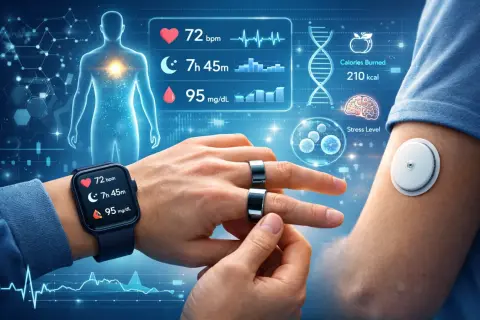
Wearable Health Monitoring Devices
Modern wearables are evolving into early warning systems for
the human body.
Examples include:
·
Smartwatches that track heart rhythm and oxygen
levels
·
Smart rings monitoring sleep quality, stress and
recovery
·
Continuous glucose monitors for metabolic health
These devices use AI to detect subtle changes long before
symptoms appear, helping users take preventive action early. For many experts,
wearables represent the most accessible entry point into longevity technology.
AI-Powered Health Analytics Platforms
Beyond hardware, AI-driven software is becoming central to
lifespan extension strategies.
These platforms analyze:
·
Long-term health data
·
Lifestyle patterns
·
Genetic and metabolic indicators
The result is personalized insights that can guide exercise,
nutrition, sleep and stress management—key factors linked to longer, healthier
lives. This has driven interest in AI-driven longevity solutions for
everyday users.
Therapies That Could Extend Human
Lifespan
Senolytic Therapies: Targeting Aging Cells
One of the most promising areas in longevity research
involves senescent cells—damaged cells that accumulate with age and
contribute to inflammation and disease.
Senolytic therapies aim to remove these cells, potentially:
·
Reducing age-related diseases
·
Improving tissue function
·
Extending healthspan
While still largely experimental, early results have fueled
global interest in anti-aging medical therapies.
Gene Therapy and Cellular Reprogramming
Gene editing technologies like CRISPR are opening new
possibilities in age-related disease prevention.
Researchers are exploring ways to:
·
Repair damaged DNA
·
Reset aging markers in cells
·
Slow biological aging at a molecular level
Although widespread clinical use may still be years away,
gene-based longevity therapies are redefining what “aging†could mean in the
future.
Regenerative Medicine and Stem Cell Treatments
Stem cell therapies aim to repair or replace damaged
tissues, offering potential breakthroughs for age-related degeneration.
Applications under study include:
·
Joint and cartilage regeneration
·
Cardiovascular repair
·
Neurodegenerative disease treatment
This area continues to attract strong investment and public
interest as part of the broader future of longevity medicine.
Why Longevity Tech Matters Now
Longevity technology isn’t just about adding years to
life—it’s about reducing chronic illness, preserving independence and
lowering long-term healthcare costs.
Its importance lies in three major shifts:
1.
Healthcare is moving from treatment to
prevention
2.
Aging is increasingly viewed as a modifiable
process
3.
Technology is making personalized health
accessible
As a result, longevity tech is becoming a cornerstone of
future healthcare systems worldwide.
The Ethical and Social Questions
Ahead
Despite its promise, longevity technology raises important
questions:
·
Who will have access to life-extending
therapies?
·
Could longer lifespans increase inequality?
·
How will societies adapt to aging populations
living longer?
These debates are becoming as important as the technology
itself—and will shape how longevity solutions are adopted globally.
The Bigger Picture
Longevity tech represents one of the most profound
innovation shifts of our time. Devices that monitor health continuously and
therapies that target aging at its source are changing how humans think about
life, health and time itself.
While no technology can promise immortality, the convergence
of AI, biotechnology and medical innovation suggests that living
longer—and better—may soon be the norm rather than the exception.

 Facebook
 Twitter
 Whatsapp
 Linkedin