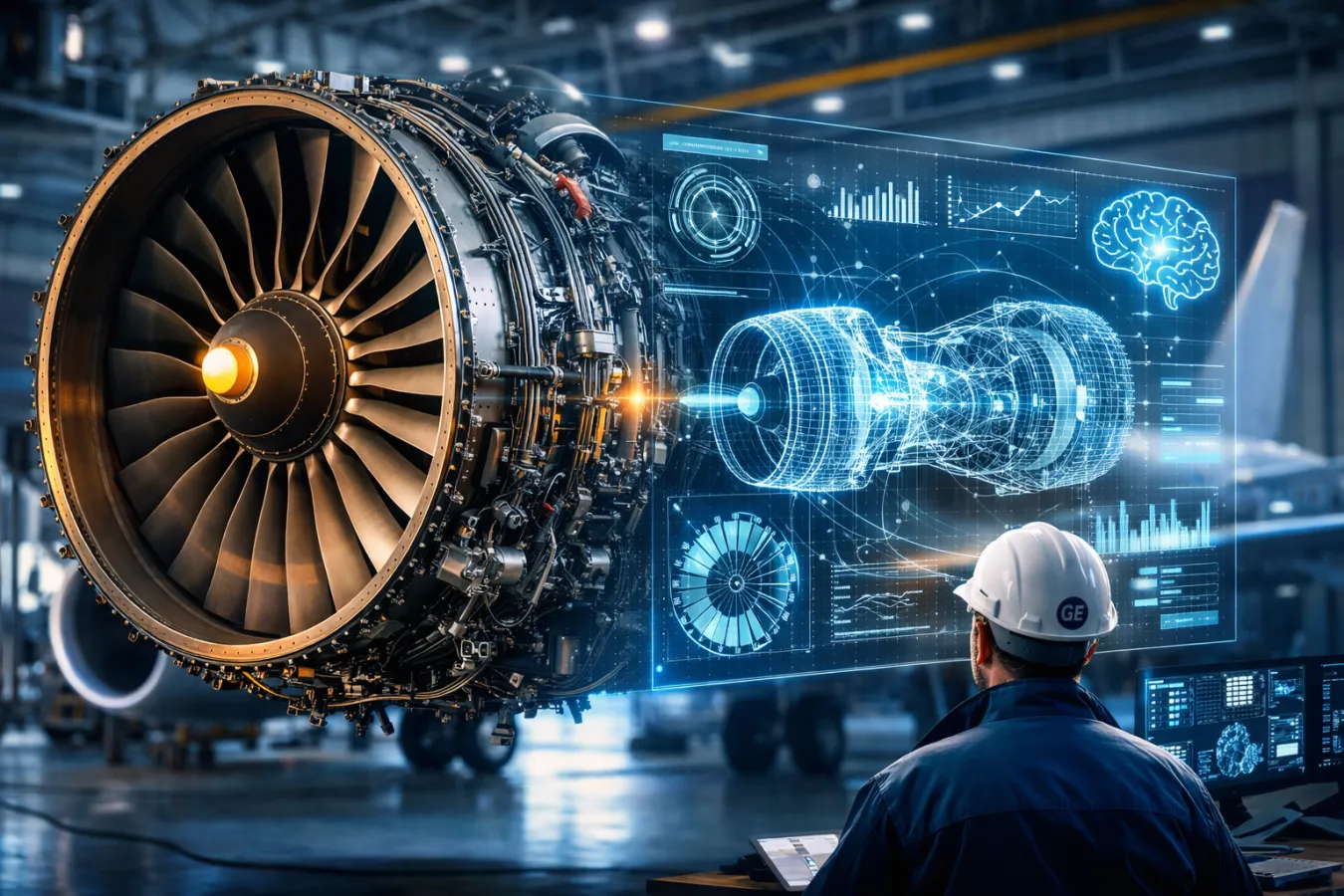
AI Is Transforming Jet Engines at GE Aerospace
Artificial intelligence is no longer a future concept in
aviation — it is already transforming how jet engines are designed, built,
inspected and maintained. Leading this shift is GE Aerospace, one of
the world’s most influential aerospace engineering companies.
With decades of experience in jet propulsion and more than 1,000
AI-related patents, GE Aerospace is using artificial intelligence to
improve engine reliability, reduce aircraft downtime and redefine the future of
aviation engineering.
In this article, we explain how AI is changing jet
engines, what GE Aerospace leaders have revealed at major conferences and
why this innovation matters for the global aerospace industry.
How AI Is Changing Jet Engines at
GE Aerospace
GE Aerospace has embedded artificial intelligence across the
entire jet engine lifecycle. From early-stage design to real-time
monitoring, AI systems now help engineers analyze massive volumes of engine
data that would be impossible to process manually.
By using machine learning, digital twins and predictive
analytics, GE Aerospace can detect engine anomalies earlier, predict
maintenance needs and improve long-term engine performance. This data-driven
approach allows aircraft to stay in service longer while maintaining high
safety standards.
AI-Powered Inspection and
Predictive Maintenance
One of the biggest breakthroughs is AI-based engine
inspection. According to GE Aerospace leadership, AI tools have increased fault
detection accuracy by around 45% while reducing inspection time by nearly 50%.
This improvement is critical for airlines and maintenance
teams worldwide. Faster inspections mean fewer delays, lower maintenance costs
and improved fleet availability. Predictive maintenance also allows airlines to
fix problems before failures occur, improving both safety and
efficiency.
Generative AI and Smarter
Aircraft Maintenance
GE Aerospace is also adopting generative AI in
collaboration with technology partners like Microsoft and Accenture. These
systems can analyze complex maintenance records, service histories and
technical documents in minutes instead of weeks.
At global aviation conferences, GE Aerospace demonstrated
how generative AI helps airlines quickly access maintenance insights, make
better operational decisions and reduce aircraft ground time. This represents a
major step forward for AI-driven aviation operations.
AI in Jet Engine Design and
Engineering Innovation
Artificial intelligence is not only improving maintenance —
it is transforming how jet engines are designed.
At GE Aerospace research and development centers, AI models
work alongside physics-based simulations to explore thousands of design
variations rapidly. Engineers can now optimize engines for fuel efficiency,
durability and sustainability faster than ever before.
AI also enables the creation of digital twins —
virtual copies of jet engines that mirror real-world performance. These digital
replicas help engineers monitor engines continuously and anticipate future
issues with higher accuracy.
GE Aerospace’s AI Strategy and
Long-Term Vision
To scale innovation, GE Aerospace has deployed AI tools
across its workforce. Its internal AI platform allows engineers and technicians
to automate repetitive tasks, analyze data faster and focus on high-value
problem solving.
This company-wide adoption highlights how central artificial
intelligence is to GE Aerospace’s future of flight strategy, where human
expertise and intelligent systems work together to enhance aviation safety and
performance.
Why AI in Jet Engines Matters for
the Aerospace Industry
Artificial intelligence is now a core technology in
aerospace engineering, not an optional upgrade. GE Aerospace’s leadership
in AI reflects broader changes across the aviation sector:
- Faster
inspections increase aircraft availability
- Predictive
analytics reduce operational costs
- AI-driven
design speeds up engine development
- Generative
AI improves decision-making across fleets
As global demand for efficient and sustainable air travel
grows, AI-powered jet engines will play a critical role in shaping the future
of aviation.
The Future of Aerospace
Engineering Starts Now
GE Aerospace’s use of artificial intelligence shows how
advanced engineering, data science and aviation expertise are merging. By
embedding AI into jet engine innovation, GE Aerospace is setting new standards
for performance, safety and reliability across the global aerospace industry.
The future of aerospace engineering will not replace humans
— it will empower them with intelligent tools that make flight safer,
smarter and more efficient.

 Facebook
 Twitter
 Whatsapp
 Linkedin